
Mortgage Basics: Fixed vs. Adjustable Rate
Signing a mortgage is one of the biggest financial commitments of your life. Make sure you understand the difference between FRM and ARM loans involving thousands of dollars.
Feb 15, 2026
Measure with a PAR meter or Photone app.
DLI
51.8
mol/m²/day
You watch your tomato seedlings stretch thin and pale toward the window, despite leaving the grow lights on for what feels like long enough. This common struggle highlights the gap between perceived light and actual biological energy intake. The Daily Light Integral Calculator bridges this gap by quantifying the total photosynthetic photons reaching your canopy, ensuring you aren't guessing at whether your plants are receiving sufficient energy to thrive or are being pushed toward light-induced stress.
The Daily Light Integral is a fundamental concept in plant physiology, derived from the need to understand the cumulative impact of light on photosynthesis over a 24-hour cycle. Researchers developed this metric to account for the fact that light intensity, or PPFD, varies throughout the day, while plants respond to the total 'dose' of light received. By integrating these instantaneous measurements into a daily value, agricultural scientists created a standardized way to compare light environments across different seasons and latitudes, ultimately providing a scientific foundation for modern indoor cultivation and supplemental greenhouse lighting strategies.
Commercial greenhouse managers, indoor hydroponic farmers, and ambitious hobbyists rely on this calculator to fine-tune their cultivation environments. When a nursery owner needs to ensure their Poinsettias receive the precise light threshold required for flowering, they use this calculation to dictate their daily lighting schedules. Similarly, researchers studying plant responses to varying light spectra use these values to maintain consistent experimental conditions across diverse climate-controlled grow rooms and growth chambers.
This represents the instantaneous flow of photons striking a surface area every second. Measured in μmol/m²/s, it acts as the "speed" of your light delivery. While a high PPFD sounds beneficial, it only tells half the story; without context of duration, you cannot determine if your plants are receiving enough total energy to complete their metabolic processes or if they are simply being scorched.
This is the total duration your lights remain active within a 24-hour cycle. It represents the "time" component of your light budget. Adjusting the photoperiod is often more energy-efficient than increasing intensity, yet it must be balanced against the plant’s internal circadian rhythms, as some species require specific dark periods to transition between vegetative and reproductive growth phases successfully.
DLI is the product of your PPFD and the duration of light, representing the total accumulation of photons hitting your canopy per square meter per day. Measured in mol/m²/d, it is the true metric of light quantity. Think of it as the total water in a rain gauge; regardless of the storm's intensity, the total accumulation is what keeps your garden alive and growing.
This refers to the plant's ability to convert light energy into chemical energy. Not all light is used equally, and DLI helps you understand the saturation point of your specific crops. If your calculated DLI exceeds the plant's physiological saturation point, the extra light is wasted and may even cause photo-inhibition or bleaching, which is why calculating the exact requirement is essential for maximum efficiency.
This is the intensity at which a plant's photosynthetic rate reaches its maximum capacity. Beyond this point, adding more light does not increase growth; it merely increases heat load and electricity costs. DLI helps you stay just below this ceiling, allowing you to optimize your energy consumption while ensuring your plants have all the photons they can possibly process for optimal sugar production.
The calculator features two primary input fields: the Photosynthetic Photon Flux Density (PPFD) measured in μmol/m²/s and your total Light Hours per Day. You simply enter your specific values into these fields to generate your daily light total.
Enter the measured PPFD value from your light meter into the first field; for example, a standard reading of 450 μmol/m²/s is common for many greenhouse vegetables.
Specify the total duration your grow lights are active in the second field, such as 16 hours, to represent your daily cycle.
The calculator automatically computes the result in mol/m²/d, displaying the total daily light integral based on your specific inputs.
Review your final DLI value to determine if it meets the required threshold for your specific crop variety, allowing for immediate adjustments to your lighting setup.
Many growers make the mistake of assuming that more light is always better, ignoring the plant’s specific DLI requirements. For instance, if you are growing low-light shade plants and you suddenly ramp up the PPFD to match your high-light flowering tomatoes, you will likely damage the tissue. Always cross-reference your calculated DLI with the known light requirements for your specific cultivar to avoid unintentional stress, keeping your light output optimized for the plant's specific metabolic capacity.
The formula behind this tool calculates the total photon accumulation by integrating the instantaneous PPFD over the duration of the light period. Because PPFD is measured in micromoles per meter squared per second and we want the final result in moles per meter squared per day, the formula performs a unit conversion while summing the total light exposure. It assumes that the intensity remains constant throughout the specified duration, which is standard for most controlled-environment lighting setups. By multiplying the intensity by the number of seconds in your specified light hours, the calculator effectively accounts for every photon delivered to the canopy, providing a robust estimate of the total available light energy for the day.
DLI = (PPFD × Light Hours × 3600) / 1,000,000
DLI = Daily Light Integral in mol/m²/d; PPFD = Photosynthetic Photon Flux Density in μmol/m²/s; Light Hours = total hours of light per day; 3600 = conversion factor from hours to seconds; 1,000,000 = conversion factor from micromoles to moles.
Sarah is managing a small commercial greenhouse in Oregon, trying to optimize the growth of her prize-winning lettuce. She needs to maintain a consistent DLI of 12 mol/m²/d. Her current lighting setup provides a PPFD of 250 μmol/m²/s, and she is currently running the lights for 12 hours a day.
Sarah starts by assessing her current lighting conditions to see if they meet the needs of her lettuce crop. She takes her measured PPFD of 250 μmol/m²/s and her current photoperiod of 12 hours. First, she realizes she must convert her light hours into seconds to align with the PPFD's per-second measurement. She calculates the total seconds of light by multiplying 12 hours by 3600 seconds per hour, giving her 43,200 seconds of light per day. Next, she calculates the total micromoles delivered by multiplying her 250 μmol/m²/s intensity by the 43,200 seconds, resulting in 10,800,000 micromoles per square meter per day. Finally, she converts this massive number into moles by dividing by 1,000,000. The resulting 10.8 mol/m²/d tells Sarah exactly where her lighting stands. She compares this result to her goal of 12 mol/m²/d and realizes she is slightly under-lighting her crop. She decides to extend her photoperiod slightly to bridge the gap and reach her desired target, ensuring her lettuce receives the full energy required for optimal leaf development and quality.
Step 1 — DLI = (PPFD × Light Hours × 3600) / 1,000,000
Step 2 — DLI = (250 × 12 × 3600) / 1,000,000
Step 3 — DLI = 10.8
Sarah concludes that her current setup is providing 10.8 mol/m²/d, which falls short of the 12 mol/m²/d she needs for her lettuce. By using the calculator, she avoids the guesswork of trial and error and confidently adjusts her timer to increase her daily light hours, ensuring her crop reaches its full potential without wasting electricity on excessive intensity.
The utility of calculating the daily light integral extends far beyond simple greenhouse management, touching on various industries where light-dependent biological processes are paramount. Whether you are scaling an operation or refining a research protocol, having a precise understanding of your light environment is critical for success.
Vertical farmers use this to maximize yield in multi-layer racks where uniform light distribution is difficult, ensuring every level receives a consistent DLI regardless of distance from the LED array.
Botanical researchers in climate chambers utilize these precise calculations to replicate specific seasonal light conditions, allowing them to study how varying DLI levels influence plant morphology and secondary metabolite production.
Home indoor gardeners rely on this to calculate if their desk lamps or hobbyist grow lights are sufficient for keeping tropical houseplants alive during the dark winter months.
Landscape architects use this data to plan interior plantscapes in office buildings, ensuring that the light provided by artificial sources matches the minimum DLI requirements for low-light-tolerant species.
Automated lighting control systems in smart greenhouses use real-time DLI calculations to dim or brighten lamps based on ambient cloud cover, optimizing energy usage while maintaining a constant, stable growth environment.
From professional horticulturists managing thousands of square feet of greenhouse space to the dedicated hobbyist tending to a single cabinet of rare orchids, the users of this tool share one common goal: the desire for data-driven precision. They all understand that light is not just a binary switch but a quantifiable resource that directly dictates the success of their cultivation efforts. By using this calculator, they move away from subjective estimations and toward a scientific understanding of their plants' energy intake, ensuring that every watt of electricity spent translates into measurable biological growth.
Commercial greenhouse managers use this to ensure consistent crop development across large-scale facilities.
Vertical farming engineers rely on these values to design lighting systems that minimize energy waste while maximizing harvest density.
Botanical researchers use the tool to maintain strict environmental standards for complex plant physiology experiments.
Indoor plant enthusiasts utilize this to troubleshoot growth issues in low-light residential settings.
Lighting manufacturers provide these calculations to help customers verify that their hardware meets the needs of specific plant species.
Avoid measuring in the wrong units: Many growers confuse foot-candles or lux with PPFD. Because this calculator requires μmol/m²/s, using a lux meter will lead to completely incorrect results. Always ensure your light sensor is specifically calibrated for PAR (Photosynthetically Active Radiation) to capture the correct photon flux, otherwise, your DLI calculation will be meaningless and potentially lead you to mismanage your light intensity.
Account for light uniformity: A single reading taken in the center of your grow tent does not represent the entire canopy. If you only measure the brightest spot, your DLI will be artificially inflated, leading you to believe your plants have enough light when those at the edges are actually starving. Take multiple measurements across your growing area and use the average value to get a realistic DLI for your entire crop.
Don't ignore the dark period: While it is tempting to run lights for 24 hours to maximize DLI, many plants require a dark period for metabolic recovery and to trigger essential physiological processes. Using this calculator to force a high DLI through a 24-hour cycle may actually hinder growth or cause long-term health issues in your plants, so verify the specific photoperiodic requirements of your cultivar before adjusting.
Consider sensor positioning: Where you place your sensor changes the data significantly. Placing a sensor at the top of the canopy versus the bottom of the leaves will result in vastly different readings. Always measure at the top of the foliage where the majority of light interception occurs, as this is the level where the plant is actually absorbing the photons required for photosynthesis and energy production.
Re-evaluate during seasonal shifts: If you are growing in a greenhouse with supplemental lighting, your ambient sunlight changes drastically with the seasons. A static lighting schedule that worked in mid-winter will result in an excessive DLI during the bright summer months. Use this calculator periodically throughout the year to adjust your supplemental light hours as external conditions change, ensuring your plants maintain a consistent, healthy daily light dose year-round.
Accurate & Reliable
The formulas and conversion factors used here are based on established standards in plant physiology, specifically the work of researchers who defined the photosynthetic photon flux density requirements for agricultural crops. By adhering to these scientific principles, the calculator provides a reliable bridge between raw sensor data and the biological reality of your plants.
Instant Results
When you are on a tight production schedule for a high-value flower harvest, you cannot afford to wait on manual conversions. Instant access to this tool allows you to make split-second adjustments to your light timers, ensuring your crop stays on schedule and meets its quality targets without delay.
Works on Any Device
Imagine you are standing in a remote hydroponic container farm, holding your mobile phone and a PAR meter. This tool is designed to work right there on the spot, helping you calibrate your light intensity and decide on the spot if you need to increase your light hours for the current growth phase.
Completely Private
We prioritize your data privacy by performing all calculations entirely within your web browser. None of your greenhouse lighting profiles or intensity measurements are ever transmitted to a server, ensuring that your specific cultivation strategies remain completely confidential, which is vital for maintaining your competitive advantage in the commercial agricultural market.
Browse calculators by topic
Related articles and insights
Signing a mortgage is one of the biggest financial commitments of your life. Make sure you understand the difference between FRM and ARM loans involving thousands of dollars.
Feb 15, 2026
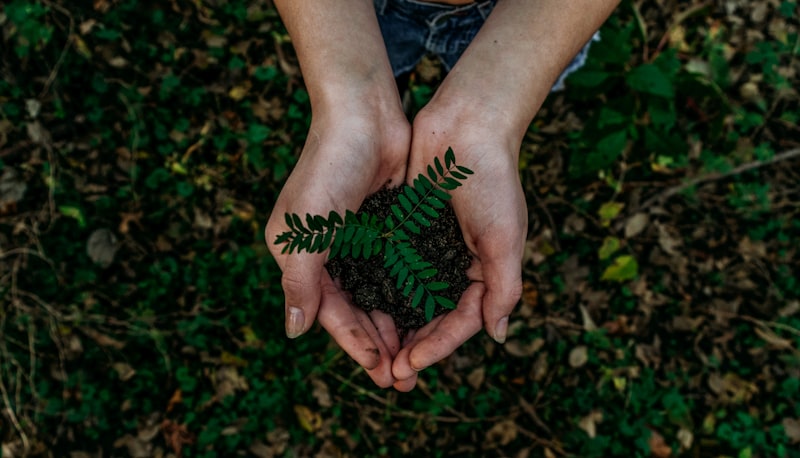
Climate change is a global problem, but the solution starts locally. Learn what a carbon footprint is and actionable steps to reduce yours.
Feb 08, 2026

Is there a mathematical formula for beauty? Explore the Golden Ratio (Phi) and how it appears in everything from hurricanes to the Mona Lisa.
Feb 01, 2026