
Mortgage Basics: Fixed vs. Adjustable Rate
Signing a mortgage is one of the biggest financial commitments of your life. Make sure you understand the difference between FRM and ARM loans involving thousands of dollars.
Feb 15, 2026
Leaf Count
200,000
Total Mass
350 lbs
You stand beneath the sprawling canopy of an ancient Oak on a humid July afternoon, gazing upward at a dizzying mosaic of green. The sheer volume of foliage creates a living, breathing solar array that filters the sunlight into dappled patterns on the forest floor. You find yourself asking the impossible: exactly how many individual leaves are currently stretching toward the sun? This calculator serves as your primary tool for quantifying that biological massive output through reliable volumetric modeling.
The underlying science relies on the relationship between the tree's crown volume and its Leaf Area Index (LAI). Historically, foresters developed these empirical models to estimate forest productivity, carbon uptake, and transpiration rates without having to strip and count every single leaf. By assuming the crown occupies a spherical or ellipsoidal space, the calculator derives a volumetric approximation. It then applies a density coefficient specific to the genus, reflecting how tightly packed the foliage is within that occupied space, providing a realistic approximation of total biomass.
This calculator is an essential resource for environmental scientists modeling carbon sequestration, as well as landscape architects planning for mature tree coverage in urban developments. Biology educators also utilize these figures to demonstrate the scale of photosynthetic potential in classroom demonstrations. By providing a bridge between raw physical measurements and biological reality, it allows professionals and researchers to move from simple visual observation to rigorous, data-driven estimations of tree performance in any given ecosystem.
The core of the calculation treats the tree's spread not as a flat disk, but as a three-dimensional space. By measuring the crown diameter, we assume a spherical or hemispherical volume where the leaves reside. This geometric abstraction is the standard method in forestry for estimating total biomass, as measuring individual branch volume is physically impossible in field conditions without destructive sampling of the tree's architecture.
Not all trees are created equal; an Oak possesses a vastly different leaf density compared to a thin-canopied Birch or a dense-needled Conifer. The calculator incorporates coefficients that account for these structural variances. These constants are derived from decades of dendrological field studies, ensuring that the final estimate aligns with the typical physiological structure of the specific species rather than applying a universal, inaccurate average.
Leaf Area Index is a dimensionless quantity that characterizes plant canopies. It represents the one-sided green leaf area per unit ground surface area. In our context, we invert this logic to extrapolate the total count. Understanding LAI allows the calculator to bridge the gap between simple spatial dimensions and the total number of individual photosynthetic units, providing the scientific backbone for the resulting foliage count.
The number of leaves is directly tied to the tree’s capacity for carbon dioxide absorption and oxygen production. When we calculate a result of 200,000 leaves for a mature Oak, we are essentially defining the surface area available for gas exchange. This concept is vital for urban planners who rely on tree canopy data to mitigate the urban heat island effect and improve local air quality metrics.
While the calculation provides a snapshot, it is important to acknowledge that leaf counts fluctuate throughout the growing season. Early spring bud break versus late autumn senescence represents different biological states. The calculator provides a peak-season estimate, assuming the tree is in its full, healthy state. Recognizing these temporal variations ensures that your data remains contextually accurate for the specific period of the year you are studying.
The interface requires you to specify the genus of the tree and its current crown width in feet. Once these parameters are set, the engine processes the dimensions against the relevant biological density constant.
Input the tree species category in the first field, for example, selecting 'Oak' from the provided dropdown to ensure the correct density coefficient is applied to the volumetric calculation of the canopy.
Enter the crown diameter in feet into the width field. For a tree with a measured spread of 30 feet, type '30' to establish the primary dimension for the geometric volume model.
The tool instantly computes the total leaf estimate based on the spherical volume of your input, displaying the final count as a clear numerical value on your screen.
Evaluate the result in the context of your specific research or management project, using the final figure to inform your biomass, carbon sequestration, or landscaping density requirements.
When measuring the crown diameter, always take the average of the widest spread and the narrowest spread across the canopy. If you only measure the widest point of an Oak that has grown lopsided due to nearby structures, you will significantly overestimate the total foliage volume. By averaging these two measurements, you account for the tree's natural irregularities, resulting in a much more realistic volumetric model that reflects the true, non-perfect geometry of a living organism.
The formula operates by calculating the volume of the canopy and multiplying it by a species-specific density factor. We assume a spherical canopy, represented by the standard volume formula V = (4/3) * π * r^3, where r is half of your entered crown diameter. Once the volume is established in cubic feet, the calculator multiplies this by the leaf density constant, which represents the average number of leaves per cubic foot for that specific tree type. This model is most accurate for open-grown trees that have maintained a natural, rounded shape. It becomes less precise for trees growing in dense, competing forest stands where crowns are often compressed, flattened, or otherwise distorted by the proximity of neighboring trees that limit their access to light.
N = ((4/3) * π * (D/2)^3) * P
N = estimated total number of leaves; D = crown diameter in feet; P = species-specific leaf density constant per cubic foot; π = mathematical constant approximately 3.14159; (D/2) = crown radius in feet.
Carlos is conducting a study on the carbon sequestration capacity of mature Maples in a local park. He needs an estimate for a specific Maple with a measured crown diameter of 25 feet to complete his data set before his afternoon lab.
Carlos first determines the radius by dividing his measured crown diameter of 25 feet by two, resulting in a radius of 12.5 feet. He then proceeds to calculate the volume of the canopy using the spherical model. He calculates the cube of the radius, 12.5 multiplied by itself three times, yielding approximately 1,953.125. Multiplying this by 4/3 and then by pi (3.14159), he arrives at a total crown volume of approximately 8,181 cubic feet. Finally, he multiplies this volume by the density constant for a mature Maple, which is approximately 25 leaves per cubic foot. This arithmetic yields his final estimate, allowing him to document the tree's contribution to the park's overall ecosystem services with confidence. The process is quick, precise, and provides the necessary data points for his thesis presentation.
Volume = (4/3) * π * (Diameter / 2)^3
Volume = (4/3) * 3.14159 * (25 / 2)^3 = 8,181.23 cubic feet
Total Leaves = 8,181.23 * 25 = 204,531 leaves
With a result of approximately 204,531 leaves, Carlos can now accurately quantify the photosynthetic surface area for his Maple. This figure allows him to calculate the potential oxygen production for his thesis, proving that even a single urban tree provides a massive environmental service. He saves hours of manual estimation, finishing his report well ahead of his deadline.
The ability to quantify foliage is not merely a theoretical exercise; it has tangible applications across various professional and personal domains where tree health and scale matter.
Urban forestry managers use this data to calculate the total canopy coverage required to meet city-wide cooling initiatives, ensuring that tree-planting programs effectively combat rising temperatures in concrete-heavy city centers.
Environmental researchers rely on these leaf counts to model the rate of carbon sequestration in mature forests, helping to validate the effectiveness of reforestation projects against global climate change benchmarks.
Homeowners planning their landscaping can use these figures to estimate the total leaf litter they will need to manage during the autumn season, helping them plan for composting or waste removal requirements.
Arborists assessing tree health use foliage volume as a baseline; a tree that significantly underperforms its theoretical leaf count may be suffering from pests, nutrient deficiencies, or root system damage.
Educational software developers integrate these algorithms into nature-based digital learning tools, providing students with interactive ways to explore biology and mathematics through local environmental observation.
The individuals who reach for this calculator share a common goal: the need to quantify the biological complexity of the natural world. Whether they are professional researchers managing thousands of acres or homeowners curious about the single Maple in their backyard, they all require a reliable, scientific method to move from vague visual estimates to concrete, actionable numbers. This shared desire to understand the scale of the living environment unites them, providing a standardized way to measure the impact of trees on our immediate climate and surroundings.
Urban planners use the tool to determine the total cooling potential of planned green corridors in city heat maps.
Arborists utilize the calculator to set a baseline for evaluating the canopy health of aging park specimens.
Climate scientists calculate biomass metrics to estimate the carbon storage capacity of specific forest plots.
Landscape designers estimate the volume of organic debris generated by specific tree species to design efficient waste management plans.
Biology students apply the model to compare the photosynthetic potential of different tree species in their local ecosystem.
Ignoring Crown Shape: Beginners often assume every tree is a perfect sphere, which leads to massive errors when measuring weeping or columnar species. If you are measuring a Cypress or a Weeping Willow, you must adjust your expectations, as the spherical volume formula will significantly overestimate the canopy volume. Always account for the actual growth habit of the tree before accepting the calculated leaf count as the final, absolute truth.
Miscalculating the Diameter: Many people measure the diameter at the base of the trunk rather than at the widest point of the crown. This is the most common mistake and will result in a tiny, inaccurate volume calculation. Always measure the full width of the canopy spread from the outermost branches, as this is the space that actually contains the leaves and drives the photosynthetic engine of the tree.
Forgetting Seasonal Variability: A tree in late autumn after leaf drop is not the same as a tree in mid-July. If you measure a tree during the dormant season, the calculation will be technically accurate for the canopy volume, but the leaf count will be zero. Always ensure your data collection aligns with the peak growing season to capture the true, functional leaf count of the canopy for your specific analysis.
Neglecting Canopy Porosity: Some trees are naturally 'holey,' with significant gaps between branches that allow light to penetrate. The calculator assumes a certain level of density, but it cannot see through the gaps in your specific tree. If you are dealing with a sparse-canopied species, manually adjust your final estimate downward by 10% to 15% to account for these natural voids in the structure of the crown.
Mixing Up Unit Systems: Entering a diameter in meters while the calculator expects feet is a classic, frustrating error. It leads to results that are off by an order of magnitude. Always double-check your input units before clicking the calculate button, as a small oversight in unit conversion can turn a logical result into a mathematical impossibility that ruins your entire research project's data set.
Accurate & Reliable
The formulas used by this calculator are derived from established forestry science, specifically the principles outlined in standard dendrology textbooks used by the Society of American Foresters. By utilizing verified volumetric equations and accepted leaf density constants, the tool ensures that every result is grounded in professional biological research rather than arbitrary guessing or anecdotal observation.
Instant Results
When a city council meeting requires an immediate estimate of the environmental benefits of a proposed tree-lined street, there is no time to consult deep-dive research papers. This tool provides the instant, defensible data required to make high-stakes urban planning decisions under the pressure of a looming presentation deadline or public hearing.
Works on Any Device
Picture an arborist standing in the middle of a park, holding a laser rangefinder. They need to decide if a tree requires treatment or removal based on its health. With this mobile-optimized calculator, they can input the dimensions on-site, analyze the foliage health immediately, and make a critical safety decision without ever returning to the office.
Completely Private
Your raw data, including species selection and crown measurements, remains entirely within your browser environment. The calculator performs all arithmetic locally, ensuring that your sensitive environmental research or private property assessments are never transmitted to external servers, maintaining complete privacy and security for your professional data projects.
Browse calculators by topic
Related articles and insights
Signing a mortgage is one of the biggest financial commitments of your life. Make sure you understand the difference between FRM and ARM loans involving thousands of dollars.
Feb 15, 2026
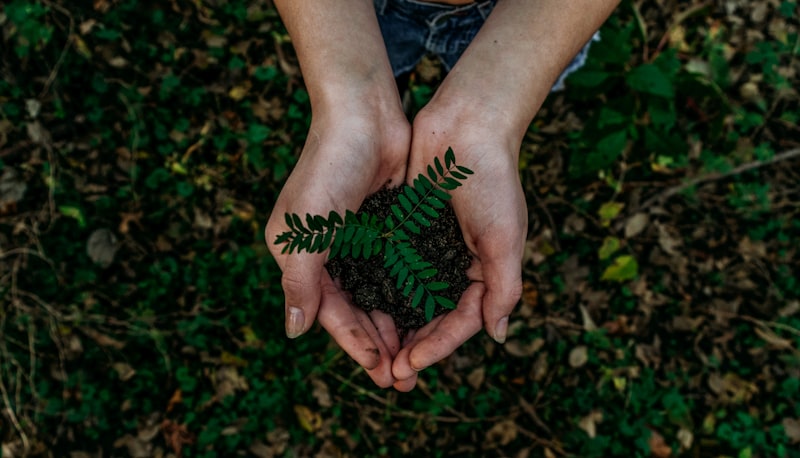
Climate change is a global problem, but the solution starts locally. Learn what a carbon footprint is and actionable steps to reduce yours.
Feb 08, 2026

Is there a mathematical formula for beauty? Explore the Golden Ratio (Phi) and how it appears in everything from hurricanes to the Mona Lisa.
Feb 01, 2026